
GE: Borrowing today’s cash from tomorrow
GE Power maintained customers’ gas turbines under contracts lasting fifteen to thirty years. Customers paid for the service, and GE paid for the people, parts and repairs needed to provide it.
To calculate its profit as the work progressed, GE estimated what it would cost to deliver each contract from beginning to end.
If GE reduced that cost estimate, it expected to keep more of the customer’s payments as profit. Under its accounting method, it then recalculated the profit on work already completed using that higher expected margin. The extra profit appeared in its current results, even though some of the savings it expected were still years away.
Those estimates therefore mattered to anyone judging how well the business was doing. Investors needed to understand how much of an improved result came from changes to the forecasts. GE failed to make that clear.
What happened
According to the US Securities and Exchange Commission, reductions in estimated costs accounted for more than a quarter of GE Power's reported profit in 2016. In the first nine months of 2017, they accounted for almost half.
Those changes didn't increase what GE could bill its customers at the time. Reported profit rose, but so did the amount of revenue recorded that hadn't yet been billed.
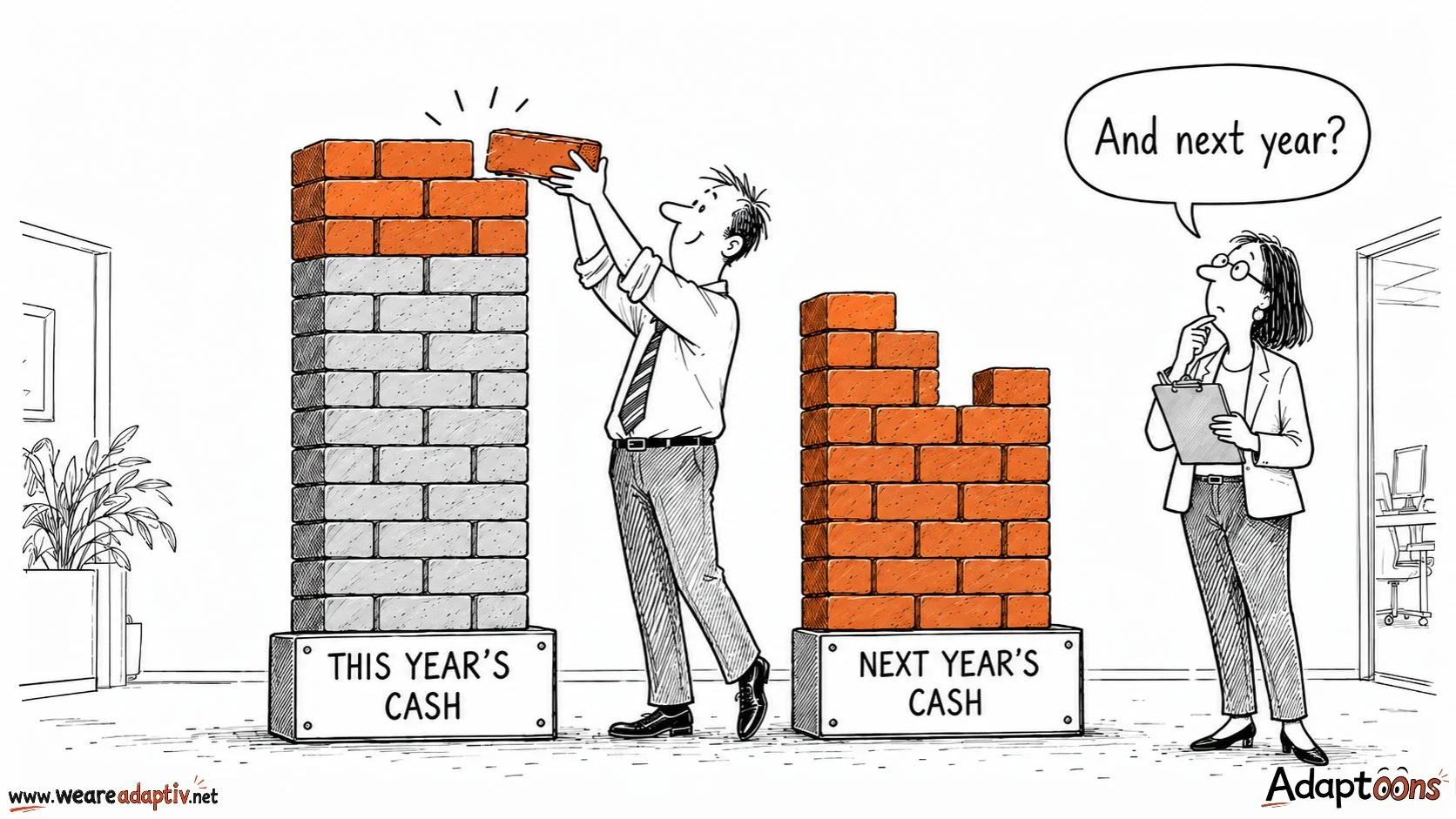
GE was also under pressure to improve its cash figures. So it expanded an existing arrangement in which GE Capital, its financial services business, paid GE Power for the right to collect future customer payments. Some weren't due for up to five years.
This brought cash into GE Power sooner and increased GE's reported cash flow from its industrial businesses. However this moving money of between two parts of GE did not, by itself, bring new money into the group.
The arrangement also had costs. GE Power gave customers discounts or other concessions to secure changes to their contracts, and paid interest to GE Capital. It gained cash now while giving up collections it would otherwise receive later.
The SEC found that GE had misled investors about what was behind its reported profits and cash growth. In December 2020, GE agreed to pay a $200 million penalty to settle disclosure charges covering both its power and insurance businesses. It neither admitted nor denied the findings.
Why did it continue
GE Power faced real commercial pressure. Its own planning documents described a flat market, increasing competition and pressure on prices. The business depended heavily on its existing service contracts to meet profit and cash targets.
Senior executives knew how the figures were being produced. The SEC's account describes GE management being told that reductions in estimated costs were critical to meeting profit targets. Management nevertheless wanted higher earnings while keeping the unbilled balance from growing.
Bringing future cash collections forward helped with the immediate cash target. But it left less to collect in later years. To get the same benefit again, the business needed to bring more future payments forward.
That is the reinforcing loop in this case: pressure to show cash today »»» encouraged a practice that reduced cash available later »»» making the next period harder »»» thereby increasing reliance on the same practice of showing cash today.
By May 2017, executives were describing the arrangement internally as unsustainable. GE discontinued it by the end of that year, according to the SEC's order.
The difficulty was already understood inside the business. Yet the arrangement had continued to expand, partly to meet targets set by GE's leadership.
For an owner, this is a useful example of the pull of financial gravity: the pressure to improve today's figures even when doing so makes tomorrow more difficult. Knowing the cost is only useful if that knowledge can influence the decision.
What this means for your business
Any business can face a similar question without anything as complicated as GE's arrangements.
A healthy bank balance might include deposits for work still to be done. A better margin on an unfinished job might depend on a revised estimate of the time needed to complete it. Invoice finance might bring a customer's payment within reach sooner.
These can all help a business run well. The question is whether you understand how they affect the picture you are using to make decisions.
Suppose a job still shows a healthy profit in the monthly report, but the person running it knows it will need more specialist time than expected. That knowledge matters while there is still time to change the plan, discuss the work with the customer or arrange extra help.
If every conversation centres on keeping the original margin, people may become reluctant to revise the estimate. The report can remain reassuring while the choices available to the business narrow.
The same applies to good news. If a team has found a quicker way to do the work, understanding how it achieved that saving helps you judge whether it can be repeated.
Reliable figures depend on the people who understand the work, the quality of their judgement and their willingness to share what they know. An accountant needs that knowledge to help you see what the business is earning and what remains uncertain.
As an owner, you cannot check every assumption yourself. You can make it easier for someone to explain that a job will cost more, a saving is still uncertain or a payment has simply arrived earlier.
That gives you a better chance of dealing with a problem before it consumes the team's time or damages a customer relationship. It also helps you recognise improvements worth building on.
Where you could begin
Choose one significant job that is still under way. Ask the person responsible for delivering it and whoever prepares your figures to look at it together.
Start with what has been completed and what remains. Compare the latest estimate of the cost to finish with the previous one. If it has changed, establish why. If it hasn't, check whether it still reflects what the team now knows.
Then look at the profit reported against the job. How much depends on costs already known, and how much on what you expect the remaining work to require?
Look at the cash alongside that. Establish what the customer has paid, what is still due and whether any money has come through financing. Check what costs remain to be paid and whether any future customer receipts are already committed to the finance provider.
You may find that the figures are well supported and everyone understands them. That is useful reassurance.
If the accounts and the team's understanding differ, find out where the difference arose. It might be an estimate that wasn't updated, information that didn't reach the right person or a concern that was difficult to raise.
Agree what would help that information reach the next decision in time.
When your figures improve, what helps you see whether the business behind them is getting stronger?