
What a new LEGO brick cost the rest of the business
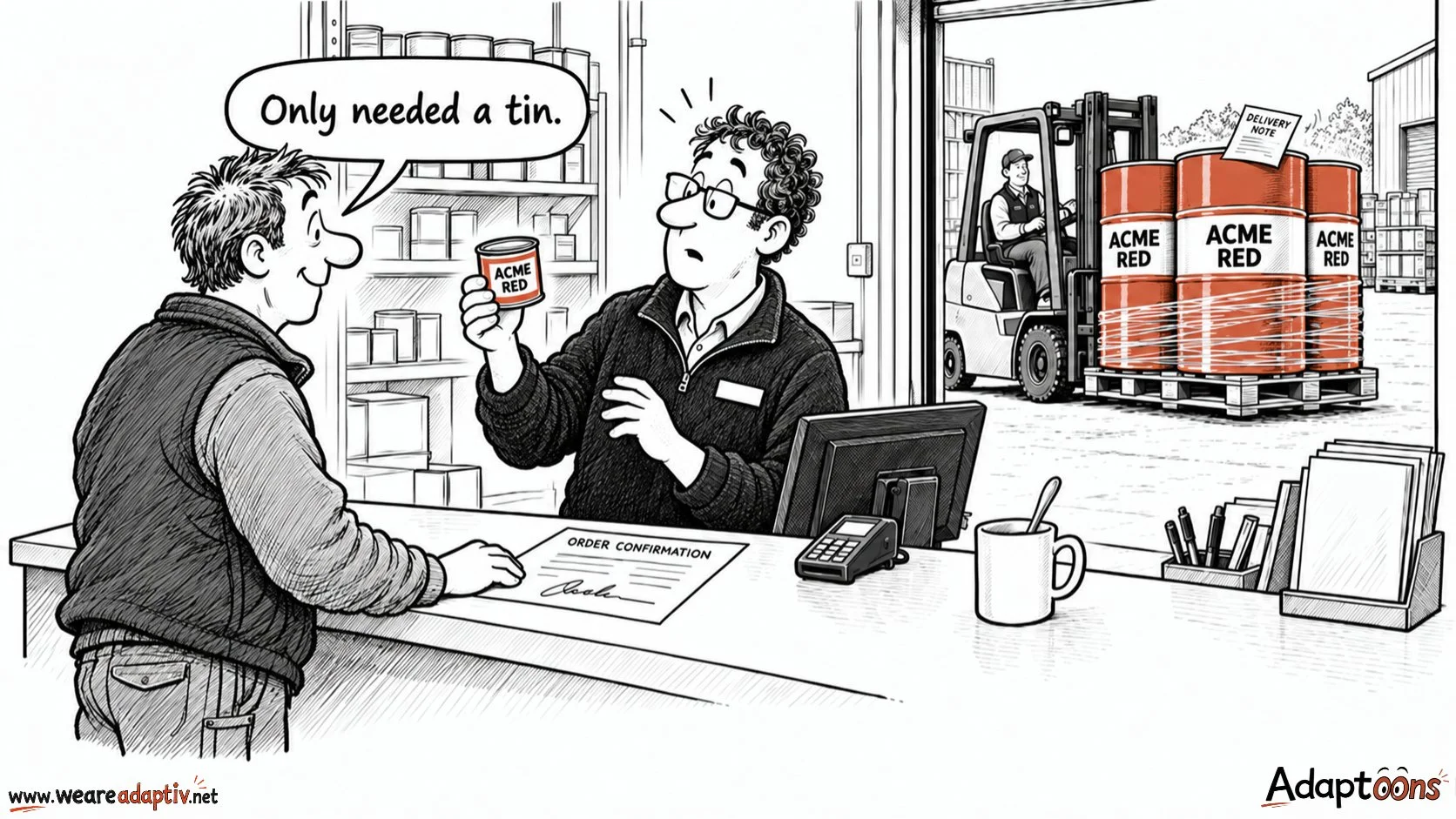
A new LEGO toy might need only a few kilos of a particular coloured plastic, but their supplier sold it in three-tonne batches.
That fact comes from a 2007 account of LEGO’s turnaround, written by some of the consultants who helped make it happen. It meant that a choice made during toy design could leave the business buying far more material than it could use. The extra cost spread well beyond the design itself.
Part of LEGO’s recovery involved helping people see those consequences before making design choices.
What happened
For adults and youngsters alike, the LEGO we know today is a creative toy behemoth famous for its addictive building block toys, cinematic universe, video game franchise and parks and real-world experiences. I look back at my childhood and see the LEGO universe I imagined in my head while building my first Cosmic Cruiser, realised in today’s world.
However it wasn’t a journey of continuous upward compounding growth.
In 2004, LEGO was in serious financial trouble. Sales had fallen, losses had mounted and the company drastically needed to change how it worked.
Developing new toys had served it well for years. New products accounted for around three-quarters of annual sales, so there was good reason to keep investing in them. But the growing range also brought more materials to buy and more parts to manufacture, store and handle.
In their account of the turnaround, the consultants described designers developing products without factoring in material and production costs. A detail that improved a toy could also make it much more expensive to produce.
One response was a simple table showing what different design choices would cost. Designers could weigh up a new colour or shape against using something LEGO already made. The business also introduced clearer rules for new materials and brought product development and supply-chain colleagues into closer cooperation.
These changes formed part of a much wider recovery. LEGO refocused its product range, changed its operations and sold assets, including its parks. Its 2005 annual report recorded a return to profit, although asset sales accounted for nearly half of that year’s profit before tax.
The cost table was one useful change within that effort. It gave designers more of the information they needed while they could still do something with it.
Why did it continue
As has been realised today, LEGO had good reason to believe in its ability to create products people wanted. When results weakened, developing more products was of course an understandable response.
The consultants’ account suggests how that response became what we’d call a ‘reinforcing loop’.
The business looked to innovation to improve its results »»» New products added complexity and cost, which contributed to its difficulties »»» Those difficulties gave it further reason to look for the next successful product »»» Back to innovation!
The benefits and costs of a design choice were also easier to see from different parts of the business. Designers could see what a new feature added to the toy. Purchasing dealt with the minimum order. Production had to make it, and the warehouse had to hold it.
Each part of the business encountered a different consequence of the same choice. Bringing those views together gave people a fuller basis for deciding whether it was worth making.
The changes also went beyond providing cost information. As sales and operations began planning orders together, functional and collective responsibilities became clearer, including the need to consider other departments before changing production arrangements.
Creative ability remained valuable. According to the consulting account, designers gradually found that working with the new constraints could make them more inventive. They had more reason to find a fresh use for an existing part.
What this means for your business
You may recognise a smaller version of this in a special order or a promise made to a customer.
For example, a customer asks for a different finish. The person quoting knows why it matters and sees a chance to win the work. The person buying the material knows the supplier’s minimum order. Someone else knows what the change will do to the production schedule.
If that knowledge comes together after the quote has been accepted, the business has fewer choices. It may have to absorb a cost, rearrange other work or go back to the customer.
A service business can face a similar problem. A tailored report or an extra round of changes may look manageable when agreed. The people delivering it may know that it needs specialist time already committed elsewhere.
Being flexible for customers can be a real strength. Unusual requests might earn a good margin, deepen a trusting relationship or help the team develop a valuable skill. The useful question is whether the people agreeing to it have enough information to judge the whole commitment.
When the pressure to win today’s order outweighs that judgement, work can accumulate faster than the business’s ability to deliver it well. Subsequently, experienced people spend more time sorting out exceptions, and there is less room to improve how the work is done. That is one way today’s sales can weaken tomorrow’s earning capacity.
There is an opportunity here to strengthen how people work together. The person closest to the customer needs access to the knowledge of those who will fulfil the promise. Those colleagues need a way to raise concerns early enough to help shape the offer.
Sometimes a short conversation will be enough. For routine choices, agreed boundaries may let people decide confidently without bringing every exception back to the owner.
Where you could begin
Choose one recent job that involved a special request. Ask the people who agreed it and delivered it to look back at it together.
Start with why you said yes. What did the customer value, and what did you expect the business to earn?
Then look at what the job actually required. Include extra preparation, unused material or support after delivery where these were relevant. If it delayed other work, make that visible too. Separate the costs you can establish from the ones you still need to understand.
Compare those costs with the income from the job. Keep hoped-for repeat business separate from work you’ve already done. Note anything your people learned, even if you can’t put a reliable price on it.
The job may have been well worth doing. If so, understanding why will help you make similar choices with confidence. If it earned less than expected, look at what was known when the commitment was made and what emerged later.
Perhaps the missing information was already held by someone who hadn’t been involved. Perhaps the work was genuinely unpredictable. Those findings call for different responses.
Use that conversation to decide what would help with the next similar request. It could be a clearer cost estimate, an earlier discussion or a limit within which someone can make the decision themselves.
When someone in your business says yes to a customer, what helps them understand what everyone else will need to do?