

Read the conditions
beneath today’s performance.
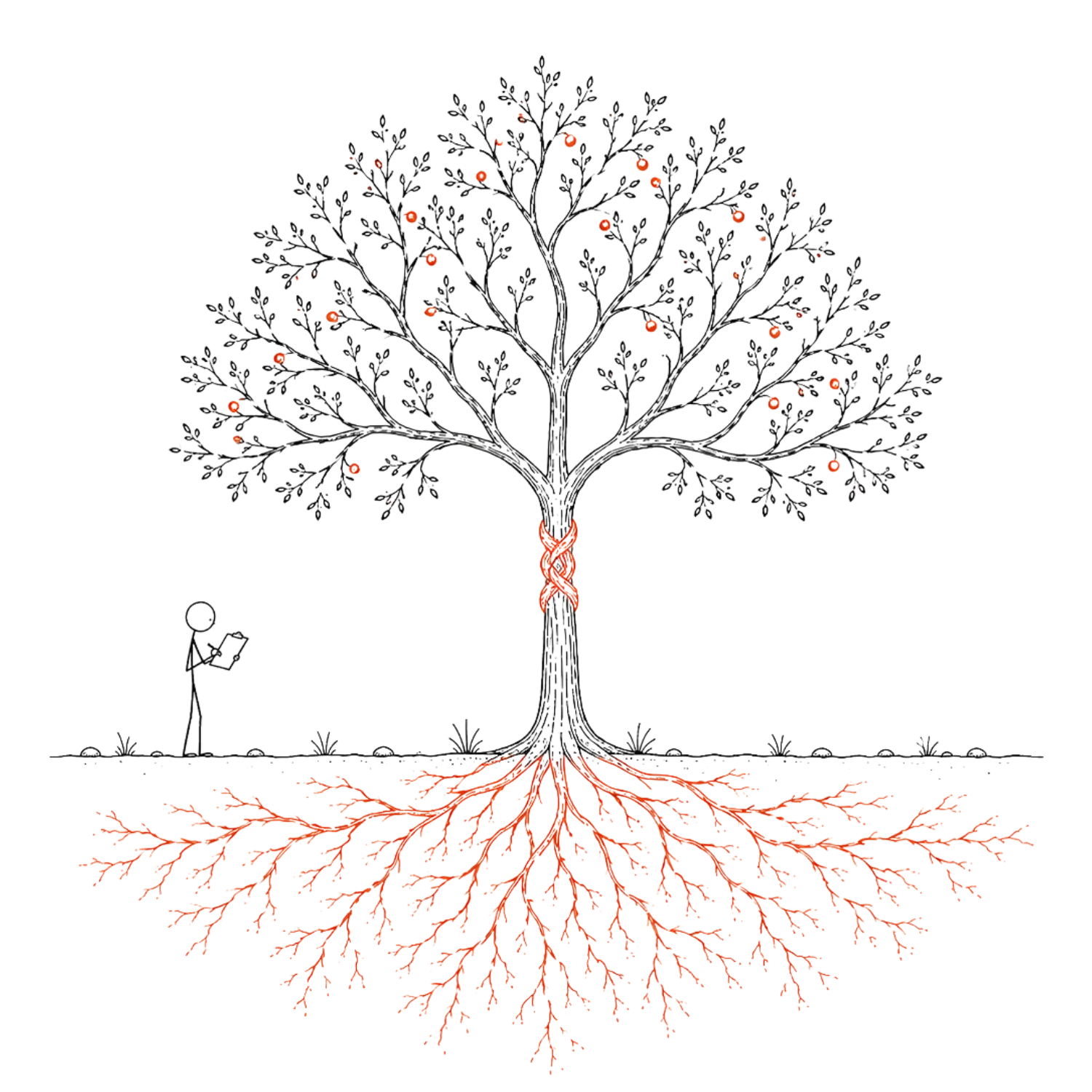
Meridian reads a business as a living system. The framework connects organisational health, internal friction, outcomes, and capital allocation and distribution.
Together, they reveal how much organisational potential is becoming sustained economic output, and how much is being lost along the way.

A business is a living system.
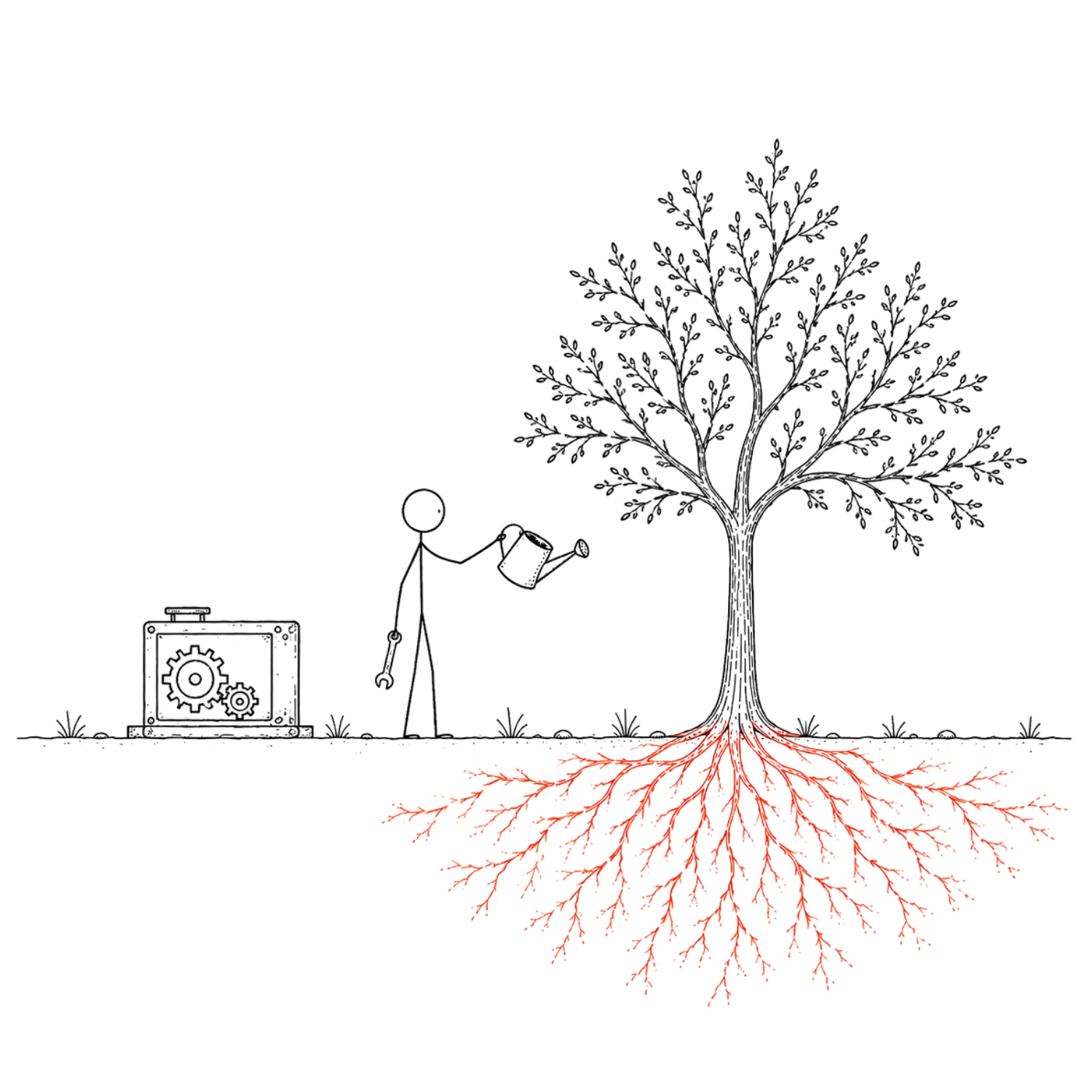
Most management thinking treats business as a machine. Machines are built from parts, repaired one component at a time, and behave the same way each day.
Businesses grow, get tired and eventually recover. At times they can even die. They remember what has happened to them. They carry the impacts of decisions made years ago, making it hard to connect cause and consequence. They respond to the conditions they are kept in, as much as to the instructions they are given.
The tree provides us with a simple metaphor to read those conditions. Each part corresponds to something real inside the business. The relationships between the parts show how organisational potential becomes performance, surplus and future value.

One tree.
One interconnected system.
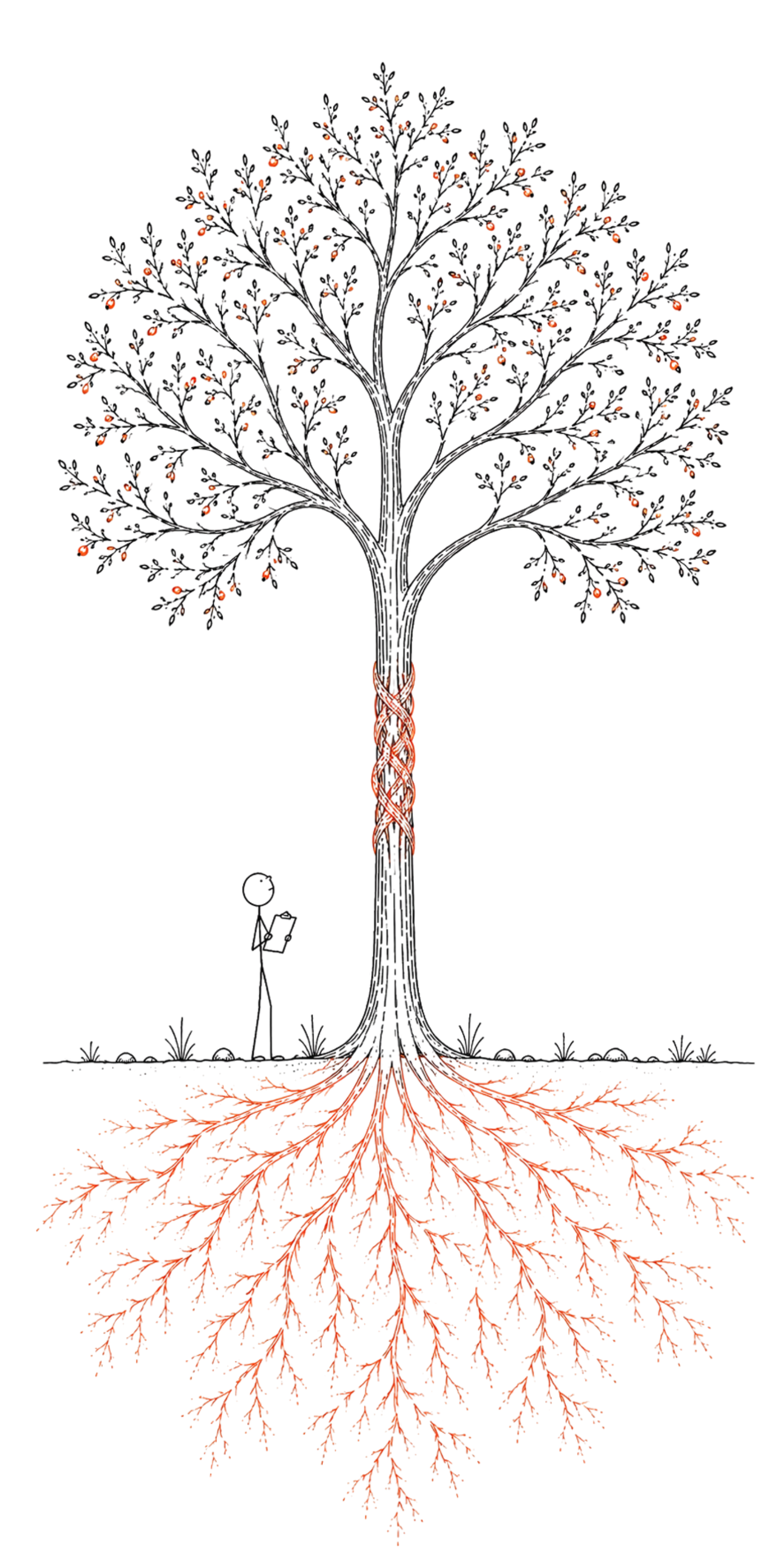
Each part can be examined separately. However they are most useful when examined together.

The health.
What generates potential
Purpose, leadership, trust, the culture people actually experience, whether it is safe to say something difficult, and the capacity to adapt when conditions change.
None appears on a balance sheet. Together they shape what the business is capable of.

The friction.
What potential must move through
Mindsets formed through success, assumptions that became unspoken dogmas, inherited decision logics and the things nobody says out loud.
Some carry potential upward. Some charge an economic rent on value creation by slowing, redirecting or trapping potential.

The outcomes.
What becomes visible
Revenue, margins, decision and execution quality, customer and market position, talent economics, growth quality and capital efficiency.
The canopy reports on what the roots produced and the trunk allowed through.

The surplus.
What success makes possible
Some surplus can be distributed, some retained and some returned to renew the people, relationships and capabilities that made the results possible.
That regenerative flow determines whether success replenishes its own foundations.

The canopy moves after the conditions beneath it.
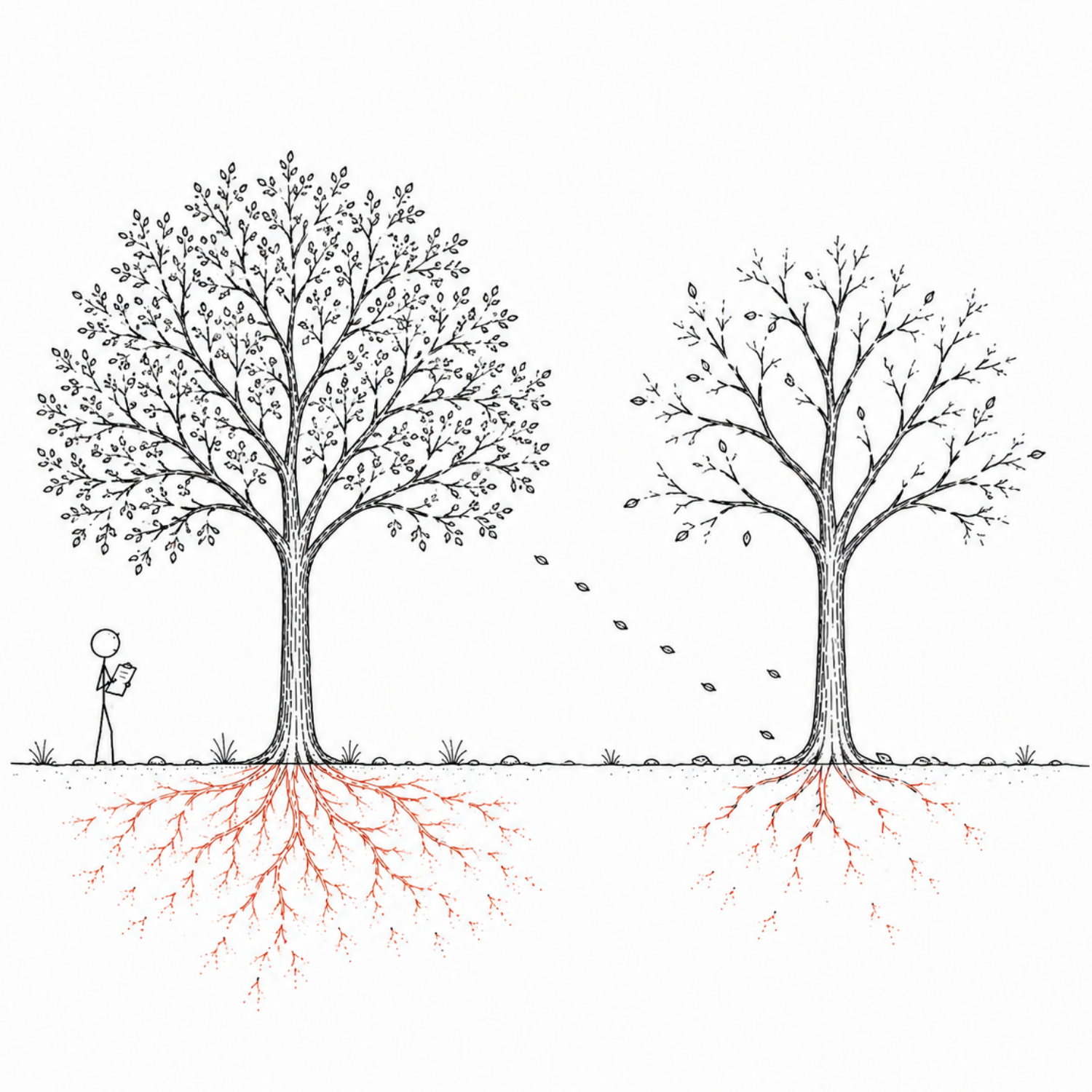
Over a quarter or two, the canopy can be forced. Cut costs, push the team harder, defer investment and the visible numbers can sustain. Over years, the canopy can only report what the roots produced and the trunk let through.
Work done on the roots pays off after the effort. Damage done to them also appears after the decision. The lag often runs in years, which is why decline is hard to catch in real-time.
A business can look strongest during the period its foundations are thinning.

See more than the current result.
Meridian connects organisational reality with the economic consequences leaders and owners already care about.

The health beneath performance.
Whether purpose, leadership, trust, culture and collective capacity are strengthening, holding fast or eroding.
The friction between potential and delivery.
Where inherited assumptions, decision logics, mindsets and social silences are consuming time, energy and opportunity.
The direction of travel.
Whether today’s success is renewing the conditions for future value or drawing down the very capacity that produced it.

Two depths of analysis.
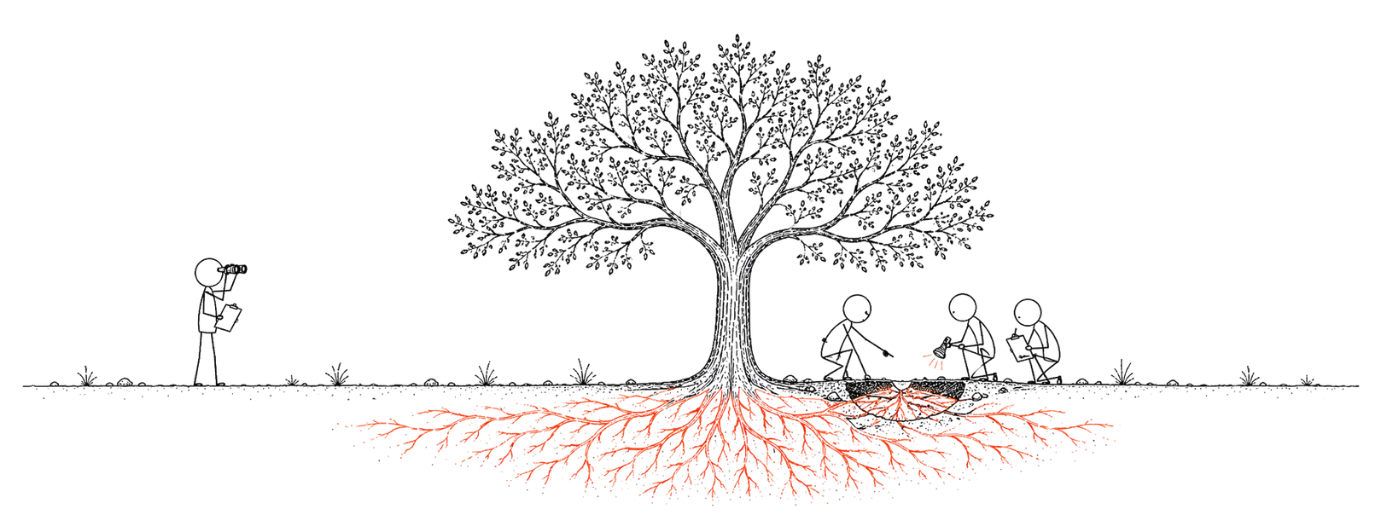
The same tree can be read from a distance or examined from within. The depth of evidence inevitably impacts what can be concluded.
An outside-in analysis.
We use public information to form a disciplined hypothesis about the business: its structure, incentives, decisions, visible strengths and possible constraints.
It can identify patterns and questions that deserve attention. It cannot establish what people experience inside the organisation or fully explain why those patterns persist.
Public evidence · External signals · Directional diagnosis
An inside-out examination.
We gather evidence from the people doing the work and set it alongside the operational, financial, systemic and historical picture.
The outside hypothesis can then be tested, refined or overturned, revealing where value is being created, where it is being lost and what conditions would need to change.
Internal evidence · Lived experience · Economic translation
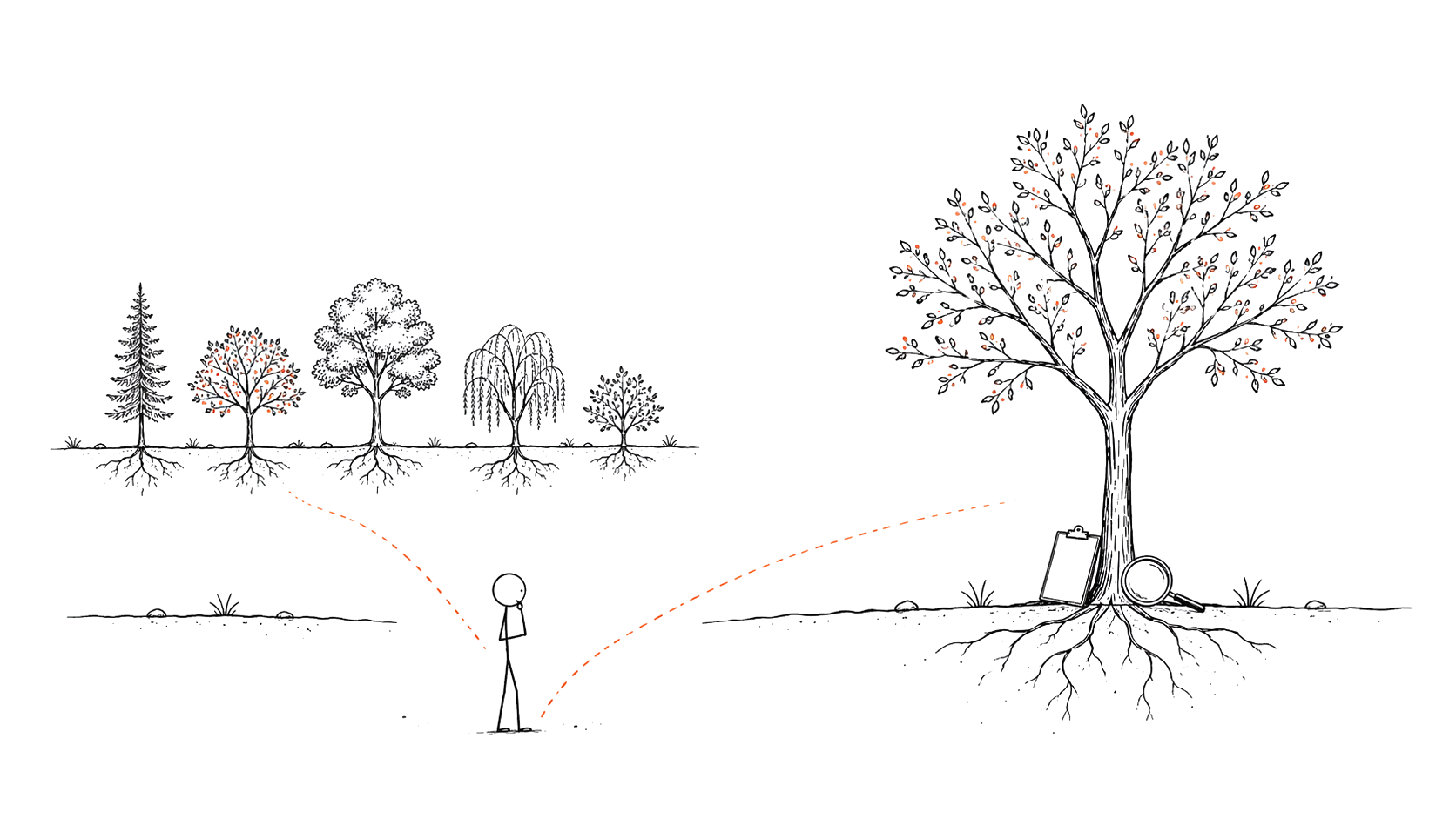

See what the tree reveals.
Explore Meridian through public companies, or begin with an outside-in reading of your own business.
See it applied
Read the company profiles.
We have analysed high profile businesses using what was on the public record at the time, profiling both companies that compounded value and companies whose unconsciously eroded it.
See your own business
Start with our complimentary analysis.
Receive an outside-in perspective on the health, friction and trajectory visible in your organisation’s public record, with the key questions we believe deserve closer attention. Offered at no charge while we are building an evidence base.