
John Lewis: Giving employees a say when times get tough
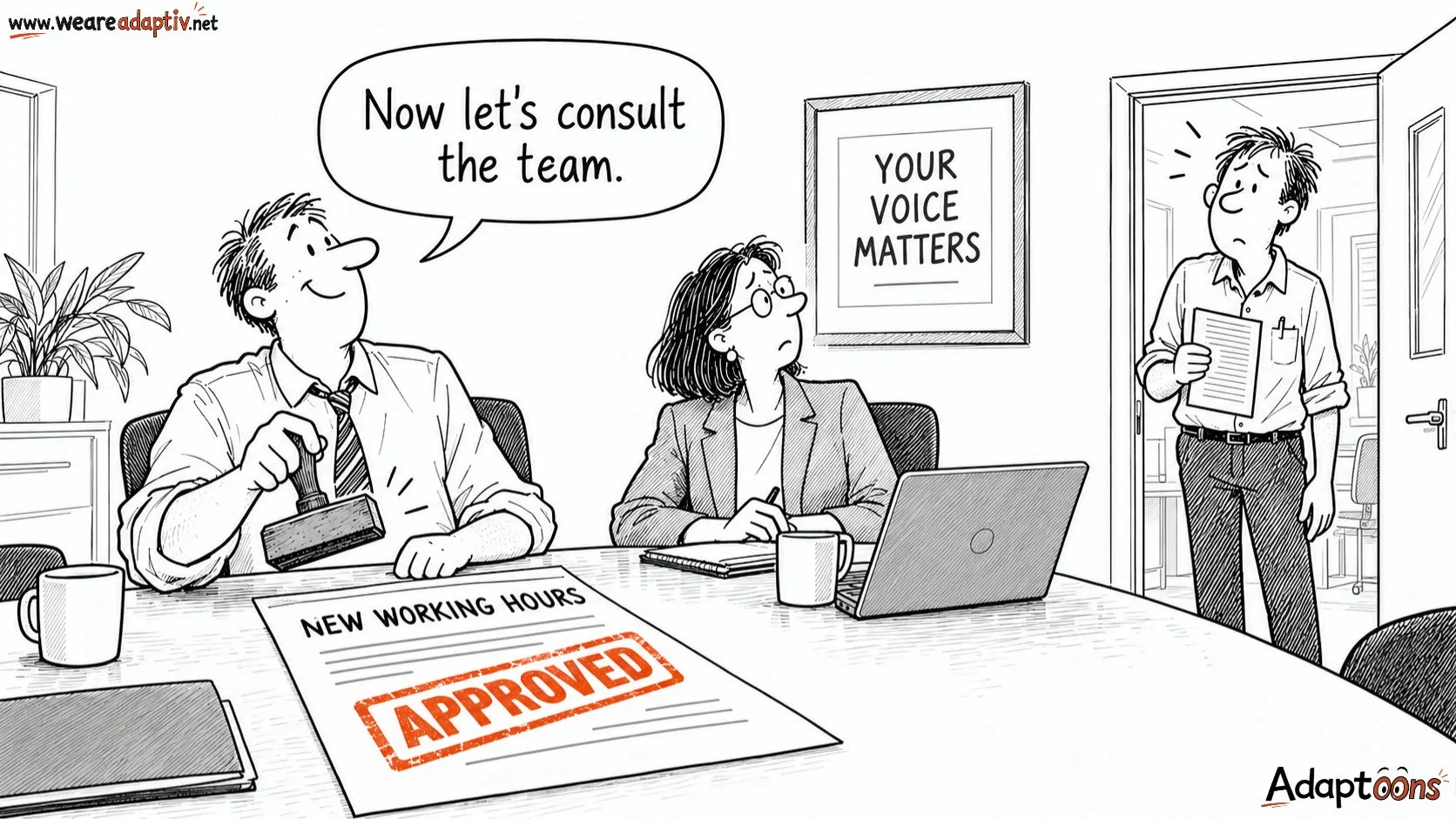
When money is tight, you may need to change working hours, reduce staffing or ask people to do more. Your team may see consequences you have missed: customers left waiting, work piling up or experienced colleagues looking elsewhere. You need a way to hear that while there is still time to reconsider.
John Lewis built a formal role for employees in questioning the people running the business. In 2023, after a £234 million loss before tax and no annual bonus, those arrangements faced a difficult test.
Its experience offers a practical lesson for owners: how to give your people a meaningful say when the business is under pressure, with clear responsibility for the decisions that follow.
What happened
The Partnership owns John Lewis and Waitrose. Its employees are known as Partners, and the business is held in trust for their benefit. John Spedan Lewis established that ownership through two trust settlements, in 1929 and 1950.
The arrangements gave employees a share in the rewards and a role in overseeing the business. Their elected representatives sit on the Partnership Council, which holds the Chairman to account.
In the financial year ending January 2023, the Partnership reported a £234 million loss before tax. Partners received no annual bonus. The company faced rising costs and pressure on customer spending, while needing money to improve its shops and technology.
The Council's May votes were part of its regular review of performance. As the Partnership explained at the time, they were advisory. They recorded employees' representatives' judgement of the past year and their support for the leadership going forward.
Funding was also under discussion. In June, then Chairman Sharon White said outside investment could be considered if the Partnership could not fund its plans itself. Any arrangement, she said, would have to comply with the trust settlements protecting employee ownership and profit sharing. She also described its existing sources of funding: money generated by trading, asset sales and borrowing.
The commitment to employee ownership had practical consequences for how the business could raise money. Partners still faced difficult outcomes. By June 2023, White reported that 16 John Lewis stores had closed during the preceding three years.
Later results show the continuing pressures. A 2% bonus returned for the year ending January 2026 after three years without one. In September 2026, the Partnership reported a half-year loss before tax of £124 million, compared with £88 million a year earlier. It said it was continuing to invest for the long term.
Why did it continue
The trust settlements made employee ownership part of the business's legal structure. The Constitution set out how power and responsibilities were shared as leadership changed.
The Council had a continuing role. The Chairman had to account for the business's progress twice a year. Elected Partners also served on the Board. As the Partnership's annual report explains, changes to the Constitution required agreement from both the Council and the Chairman.
These arrangements gave employees an established route to question decisions and influence how the business was governed. Using that route formed part of their responsibilities as owners.
The financial challenge remained real. In her June 2023 speech, White described a period when sales had grown substantially while profits had stayed flat, followed by years of restricted investment. The business needed to improve its commercial performance as well as preserve its ownership model.
The Constitution gave the business a way to examine difficult choices against its commitments. Commercial judgement still determined whether shops could pay their way and whether customers wanted what the business offered.
For owners, the useful lesson is to give important promises a practical place in the way decisions are made. A commitment becomes more dependable when someone has the information and authority to question a proposal that might weaken it.
What this means for your business
You may have told your team that their experience matters and that you want them involved in changes to their work.
The test comes with an actual decision. Perhaps you need to reduce staffing costs, change opening hours or introduce a new system. Time is short, the financial case looks clear and you want to get on with it.
The people doing the work may know something the proposal misses. A change in hours might leave a busy period short of experienced staff. A new system might move administrative work onto people whose time is needed with customers.
Hearing that before the decision can help you assess the saving more accurately. It also gives people a chance to suggest a better way to achieve it.
The promise to involve them needs some practical details. Which changes will they be consulted on? What information will they see? Who makes the final decision, and how will they explain it?
Consultation can improve a decision even when the final choice is unpopular. People need to know what they can influence and hear how their concerns were considered. Asking for their views after everything has been settled gives them little opportunity to help.
There is an economic reason to take this seriously. A saving that increases rework or leaves customers waiting may be smaller than it first appears. If people conclude that raising concerns changes nothing, the business may hear less from those best placed to spot the next problem.
The same thinking applies to other commitments. If you promise reliable after-sales support, someone needs to consider it before support hours are cut. If developing skilled people matters, a proposal to reduce training needs to include what that means for the work you expect to win and deliver.
Some changes will still be necessary. Clear responsibilities help you examine their consequences and explain your choices. They also give other people a way to protect what matters without relying on you to remember every promise in every meeting.
Where you could begin
Choose one commitment your people or customers rely on. Make it specific enough to examine, such as involving the team before changing how their work is organised.
Look at a recent decision that tested it. Ask someone affected by the decision to work through what happened with you.
Establish when they first heard about the proposal, what was still open to change and whether they had enough information to contribute. Look for an example of their input affecting the decision, or a clear explanation of why it could not.
The commitment may already be well supported. If so, identify what made that possible so it can be repeated.
If you find a gap, agree one practical change. It might be an earlier discussion with the team, a requirement to explain the effect on customers, or a named person who can ask for a proposal to be reconsidered.
Be clear about who remains responsible for deciding. Then check how the arrangement works on the next relevant decision.
When a difficult decision puts one of your promises under pressure, who has the right to bring it into the conversation?