


Each company we have profiled here, has been studied from the outside, based on what was on the public record at the time: accounts, filings, parliamentary and regulatory findings, academic research, contemporary press, and what the company said about itself while it was happening.
The lens is our framework, Meridian, which looks at a business the way you would look at a tree.
The results everyone watches sit in the canopy.
These are based on what sits below, in the roots and in the friction between the roots and the canopy.
So each profile finds and dates the one mechanism carrying the weight, shows how many years passed before the accounts agreed, sets the company against a competitor who met the same conditions and chose differently, and asks what an outsider could actually have seen at the time.
Some of these businesses held together and endured. Others came apart. They sit together on purpose, because the mechanism that protected one is usually the same one that failed in another.
Each one ends with something you can check in your own business this week. None of these companies is a client. We have never been inside any of them.
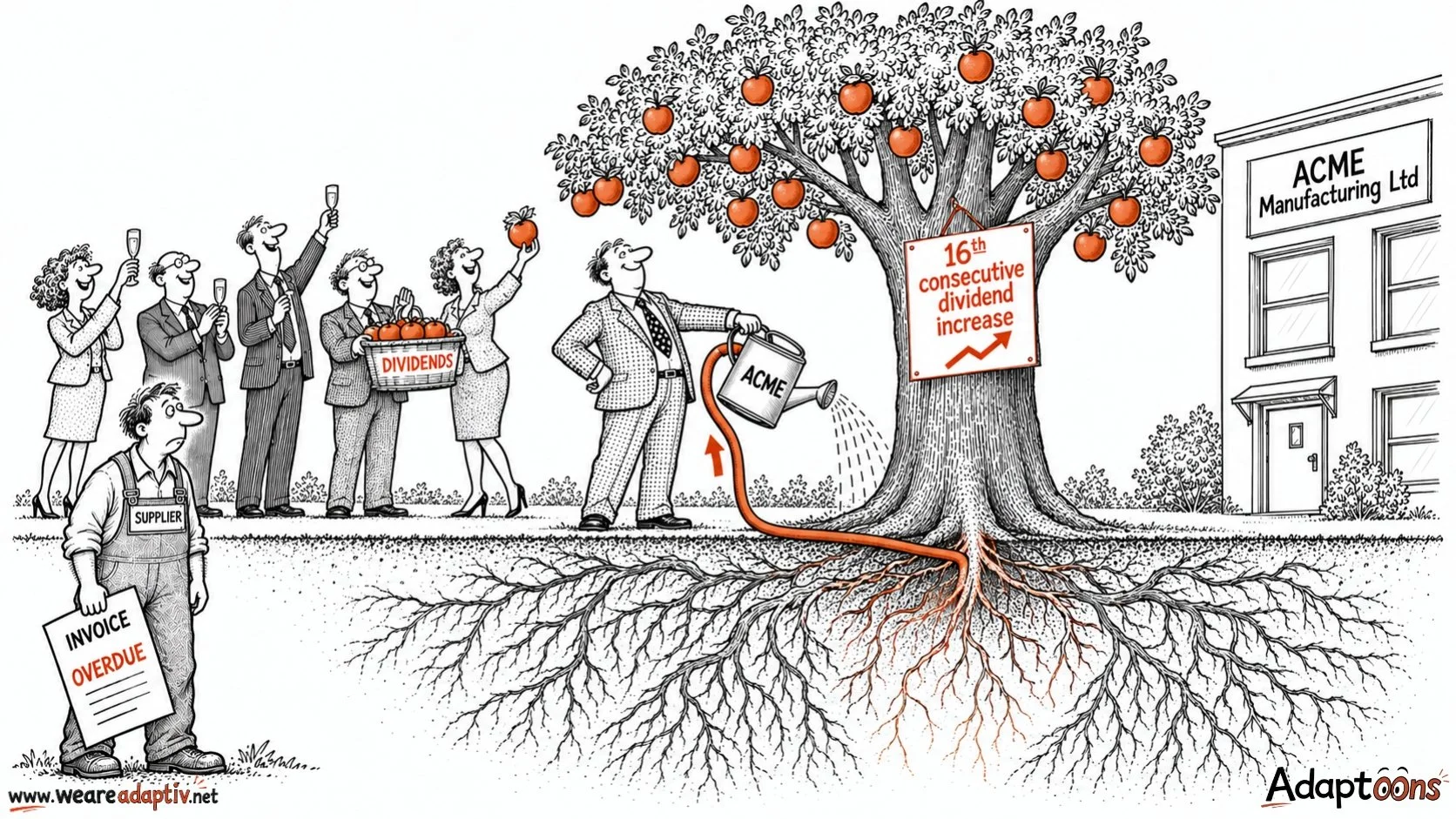
How Carillion’s dividend outlived its cash flow
On 9 June 2017, Carillion paid £54.4 million to its shareholders.
Thirty-one days later, it announced an £845 million provision against the value of its contracts, suspended the dividend and lost around seventy per cent of its market value over the announcement and the two days that followed.
The dividend had been proposed on 1 March. It was Carillion’s sixteenth consecutive annual increase.
The rise itself was almost ceremonial: from 18.25p to 18.45p a share, an increase of two-tenths of a penny. The announcement carrying it was headed “Performance in line with expectations”. It pointed to a pipeline of contract opportunities worth £41.6 billion, put revenue visibility for 2017 at 74 per cent and said the group had a good platform from which to develop the business in the year ahead. KPMG’s audit opinion on the 2016 accounts was dated the same day.
How Patagonia protected its purpose from the next owner
In 1957 an eighteen-year-old climber walked into a junkyard and came out with a used coal-fired forge, a 138-pound anvil, some tongs and a few hammers. He taught himself to blacksmith in his parents’ back garden in Burbank, made his first climbing pitons out of an old harvester blade, and sold them to friends at $1.50 each. He could forge two in an hour. Money was thin enough that before one summer in the Rockies he bought two cases of dented tinned cat tuna from a damaged-can outlet in San Francisco and lived on that.
That was Yvon Chouinard. Sixty-five years later, in September 2022, he gave away the company that grew out of that forge, valued at around $3 billion, and announced that Earth was now its only shareholder.
Cadbury’s takeover began before Kraft arrived
Cadbury wasn’t sold because it was failing.
On 19 January 2010, one week after reporting performance ahead of market expectations, its board recommended Kraft’s final offer. Revenue was growing. Margins had improved. The business had just made the strongest possible argument for its own future and received an offer valuing it at 13 times underlying 2009 EBITDA.
Cadbury could still say no. But it didn’t have anyone left with enough power to make no a final answer.
How Costco turned higher wages into lower costs
In April 2018, at a chamber of commerce lunch in Issaquah, Washington, Costco's then chief executive Craig Jelinek told a story against himself. He had once gone to the company's co-founder, Jim Sinegal, with a problem. "Jim, we can't sell this hot dog for a buck fifty. We are losing our rear ends." Sinegal's reply, as Jelinek recalled it, was short. "If you raise the effing hot dog, I will kill you. Figure it out."

Nokia saw the iPhone coming, but couldn’t act on what it knew about itself
On 10 January 2007, the morning after Steve Jobs held up the first iPhone in San Francisco, people inside Nokia met to work out what they had seen.
The slides from that meeting are public now, held in the Nokia Design Archive at Aalto University, which opened to the world in 2025. The executive summary calls the iPhone a serious high-end competitor. Further down, the deck records that the user interface had been a strength for Nokia, that consumer research showed it slipping, and that urgent action was required. Nokia needed to build a touch interface to fight back, it said, and S60 should remain the focus.
Nokia didn’t fail because it couldn’t see what was coming, it saw the fault line the next morning.
Timo Partanen, then Nokia’s director of market and competitor analysis, was in the room. Speaking to IEEE Spectrum in 2026, he described the mood as untroubled. Apple was another competitor with a good product. If it worked, Nokia would do the same.
The numbers agreed with him.
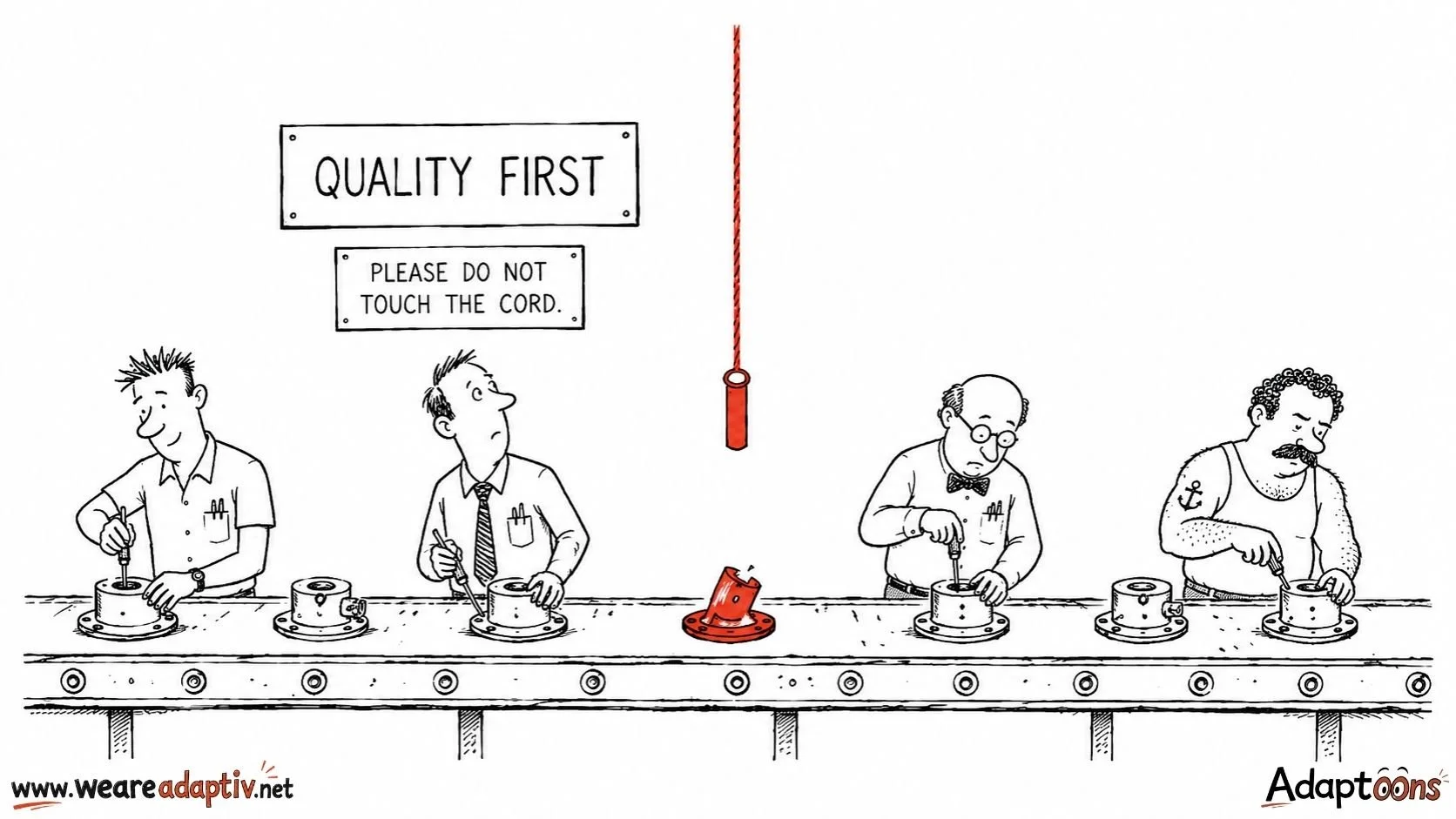
How Toyota turned stopping work into a competitive advantage
Rick Madrid spent seventeen years building Chevrolet trucks at General Motors' plant in Fremont, California. It was among the worst factories in the company. When it closed in 1982 there were more than seven hundred grievances outstanding and absenteeism was running at roughly a quarter of the workforce, according to Paul Adler's study of the plant at the University of Southern California. Madrid drank on shift.