
Strengthen the Source of Your Earnings
Where Is Your Business
Working Harder Than It Should?
Four patterns worth recognising before deciding what to change.
Sometimes a business becomes harder to run even when capable people are making sensible decisions. You add staff, tighten controls or ask for more accountability. It helps for a while but then the same difficulty comes back.
One possibility is a pattern that feeds itself: a response solves an immediate problem while gradually wearing down the judgement, trust and capability the business needs for tomorrow. These four common examples show how that happens, what it means for earnings and growth, and the strengths you can build on to change it. If one of them feels familiar, it's worth exploring further.
1. Growth keeps pulling experienced people back in
It’s 7pm and your most experienced manager is still on the phone, sorting out a client problem nobody else could handle. Tomorrow there’ll be another one. You’ve hired three people this year, and somehow she’s busier than before.
When experienced people repeatedly rescue difficult work, they protect the client and keep things moving. At the same time this can displace the time needed to develop team capability, skill and judgement. More headcount adds capacity, yet difficult decisions still queue with the same few people, and in the first few weeks new recruits add to their supervision load.
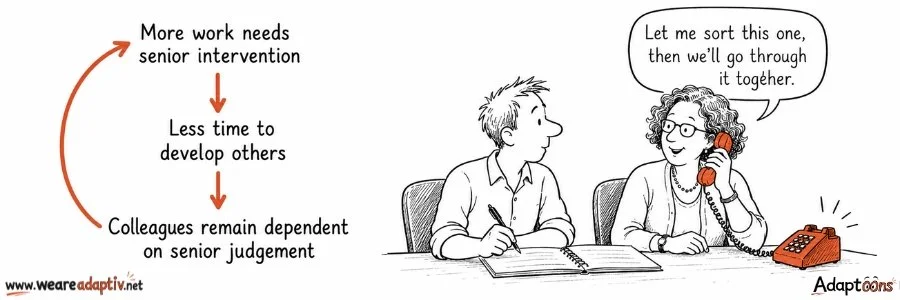
Why it matters: Senior time can limit how much profitable work the business delivers. Headcount and costs may rise faster than its ability to deliver without repeatedly drawing on the same few people.
Strength to build on: Your experienced people’s judgement and client knowledge. Shared reasoning and supported decisions help that capability develop across the team.
One question: As you deliver today’s work, are you also building the capability to handle tomorrow’s?
2. The fix makes the next issue trickier to spot
Another deadline missed, and nothing was said until it was too late. You’ve been clear with the team: take ownership, come with solutions, not problems. They listened. They’re trying harder to fix things on their own. This time, you heard about the issue even later.
Everyone is trying to behave responsibly and take more ownership. But when ownership is understood as solving problems alone, people can hold on to them longer. By the time a concern surfaces, options are limited and the late surprise seems to confirm that more pressure is needed, reinforcing the same response.
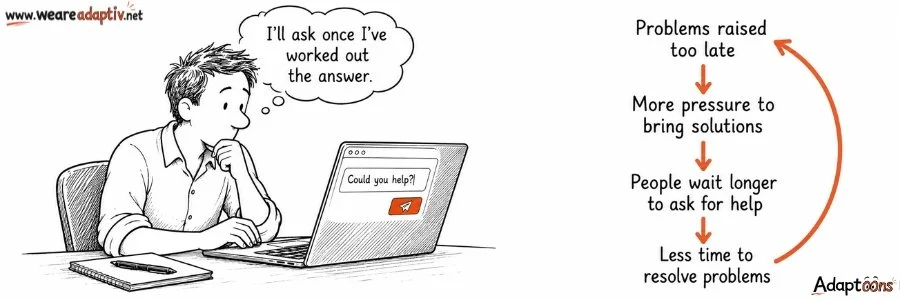
Why it matters: Last-minute recovery and rework can eat into margin. Opportunities to adjust workloads or agree changes with clients early are lost, and reliability suffers.
Strength to build on: People’s willingness to take responsibility. Pair it with a clear expectation of early warning and a useful response when someone raises a concern.
One question: What has our response to the last problem taught people to do when the next one appears?
3. Decisions still come back to the owner
You handed the decision over. Then you saw what they’d chosen and changed it. You may have improved that particular decision. Now similar decisions come to you first, “just to check”.
The manager learns that checking first is safer. As more decisions return, the owner sees further evidence that they need to stay involved. Even a capable manager can become reluctant to act independently when the practical limits of their authority are uncertain.
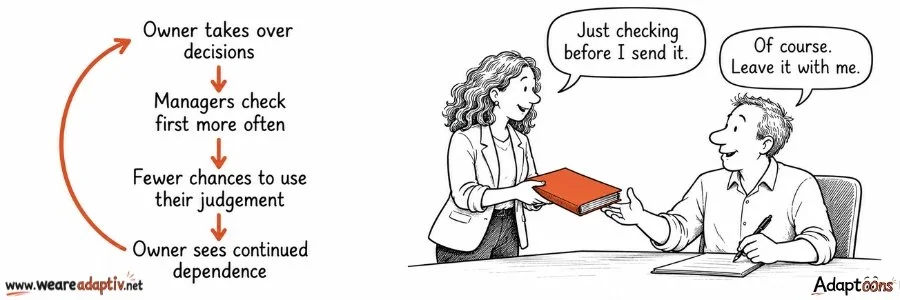
Why it matters: Decisions wait and the owner’s attention is fragmented. Growth and a future handover can remain heavily dependent on one person’s availability.
Strength to build on: The owner’s commercial judgement and commitment to quality. Share the reasoning, clarify decision boundaries and support managers in using their authority.
One question: What happens when someone makes a reasonable decision you would have made differently?
4. More reporting, but still no clearer picture
You’re about to hire an operations manager or bring in a new system because nobody seems to have a clear picture of what’s going on. The weekly reports and extra sign-offs you introduced last year were meant to fix that too.
Adding reporting and approvals can feel like ways to improve alignment and shared understanding. Where they duplicate information or leave decision rights unclear, people spend longer preparing updates and waiting for answers. Work slows, information becomes less current and the case for yet more control grows stronger.
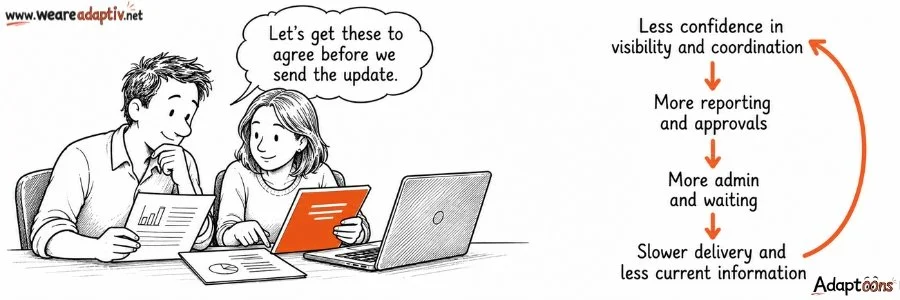
Why it matters: Overheads can rise while management attention is absorbed by the controls themselves. A new hire or system could resolve this pattern by clarifying authority or removing duplication. Its value depends on what it changes.
Strength to build on: The intention to coordinate well and manage risk. Establish what information and authority people need, then design the controls around that.
One question: Will this investment resolve why coordination is difficult, and what existing work or controls could it simplify or replace?
Strengthen the source of your earnings
Your earnings grow from a living source: your people, the trust between them, your customers and their trust in the business, and the way decisions become action. The things people feel able to discuss, and those they keep to themselves, shape that source too. Understanding what strengthens it helps you protect what you’ve built and create room for growth.
Our Meridian framework brings together AI-assisted analysis, Indigenous wisdom and decades of systemic consultancy and coaching experience. My ten years in a lineage rooted in teachings from the indigenous peoples of North America, inform how I look at the whole business, the relationships within it and what needs attention for it to thrive.
We begin with an important question about your business. We look from the outside, through what it shows the world, and then from the inside, through its records and conversations with you and your team. Together, we build a picture of where the source of earnings is strong, where it is being worn down, what that could be costing each year, and a small number of priorities to act on.
The same symptom can have different causes, and something that looks inefficient may be protecting a valuable strength. We test the findings with you and make the assumptions behind any financial estimates clear. Where further support would help, we work alongside you and your team to strengthen decisions, collaboration and effective action.
If one of these patterns feels familiar, I’d be happy to talk it through. No preparation needed, just talk me through what’s happening.