
Three currents running through our present moment,
And how to stay oriented within them.

Most people sense it now, even if they struggle to name it.
Something feels both stable and unstable at the same time. Parts of life continue much as before. Work gets done. Markets function. And yet, underneath, there is a persistent sense that the ground has shifted, that familiar assumptions no longer quite apply.
This isn’t just media noise or personal anxiety. Something structural is shifting beneath our feet.
For the past few decades, many of us lived inside an implicit assumption: that the world was gradually becoming more open, more integrated, more predictable. Trade expanded. Travel became normal. Rules, while imperfect, broadly held.
That era is ending.
What comes next isn’t one single future, but a set of currents already flowing through the present. None of them are apocalyptic. None of them are a return to ‘business as usual’. And all of them place new demands on societies, organisations, leaders and the institutions we depend on.
What follows is my attempt to make sense of these currents, not as predictions, but as a way of holding contradictory signals together. Understanding them isn’t about fear. It’s about preparedness and agency.
One important clarification upfront: these currents are not neat alternatives. We are already living inside all of them at once.
Different sectors, countries, and communities experience different logics simultaneously. Some areas still operate in a largely integrated, functioning world. Others already live with hardened borders, politicised trade, and sharper constraints. And layered across both is the ever-present possibility of sudden shocks that reorder priorities overnight.
This layered reality explains a common paradox many people feel: Things are mostly fine, and something is not fine at all.
Both perceptions are true.
The challenge, then, is not choosing the right future to prepare for. It is learning how to stay oriented and coherent while multiple currents pull in different directions at the same time.

The first current: fragmented but functioning.
In this current, global tensions remain high, but mostly contained. Countries compete more openly. Trade becomes more regional. Supply chains are redesigned for resilience rather than pure efficiency. Politics is noisier, but outright collapse is avoided. Life continues. Markets function. Jobs exist. But volatility becomes a feature, not just a bug.
Day to day, this feels like prices fluctuating more often, certain goods or services becoming less reliable, long-term plans feeling harder to lock in, and organisations spending more time managing uncertainty. This is a world that works, but no longer feels smooth.
Societies in this current, begin to reward adaptability over optimisation, competence over grand promises, and institutions that can hold things together. People start to value reliability, trust, and steadiness more than speed or novelty.
How do you prepare for this without panic? Build buffers; time, savings, energy, relationships. Develop transferable skills rather than narrow specialisation. Choose organisations and communities that value learning rather than blame. Reduce dependence on single points of failure, whether financial, professional, or emotional.
This current doesn’t require radical reinvention.
It requires maturity.

The second current: harder borders, harder choices.
In this current, competition escalates. Countries prioritise their own security and economic strength. Trade becomes politicised. Access to markets, technology, and capital grows increasingly conditional. The world doesn’t fall apart, but it hardens.
Day to day, this shows up as more ‘us versus them’ narratives, increased scrutiny of organisations and individuals, fewer neutral spaces, and stronger pressure to choose sides. Uncertainty becomes more personal. Decisions feel heavier.
In this world, tolerance for internal dysfunction drops. Societies lean on institutions that create real economic value, that employ people for the long-term, that contribute to national resilience. At the same time, polarisation increases. Those who feel left behind look for someone to blame.
How do you prepare for this without becoming rigid yourself? Strengthen your sense of identity and values, without turning them into ideology. Invest in real-world capabilities rather than abstract status. Prioritise trust-based relationships over transactional ones. Avoid over-exposure to outrage-driven news and social media narratives.
The danger in this current isn’t hardship, it’s hardening from the inside. Staying human, curious, and grounded becomes a quiet act of leadership.
The third current: shock, then reset.
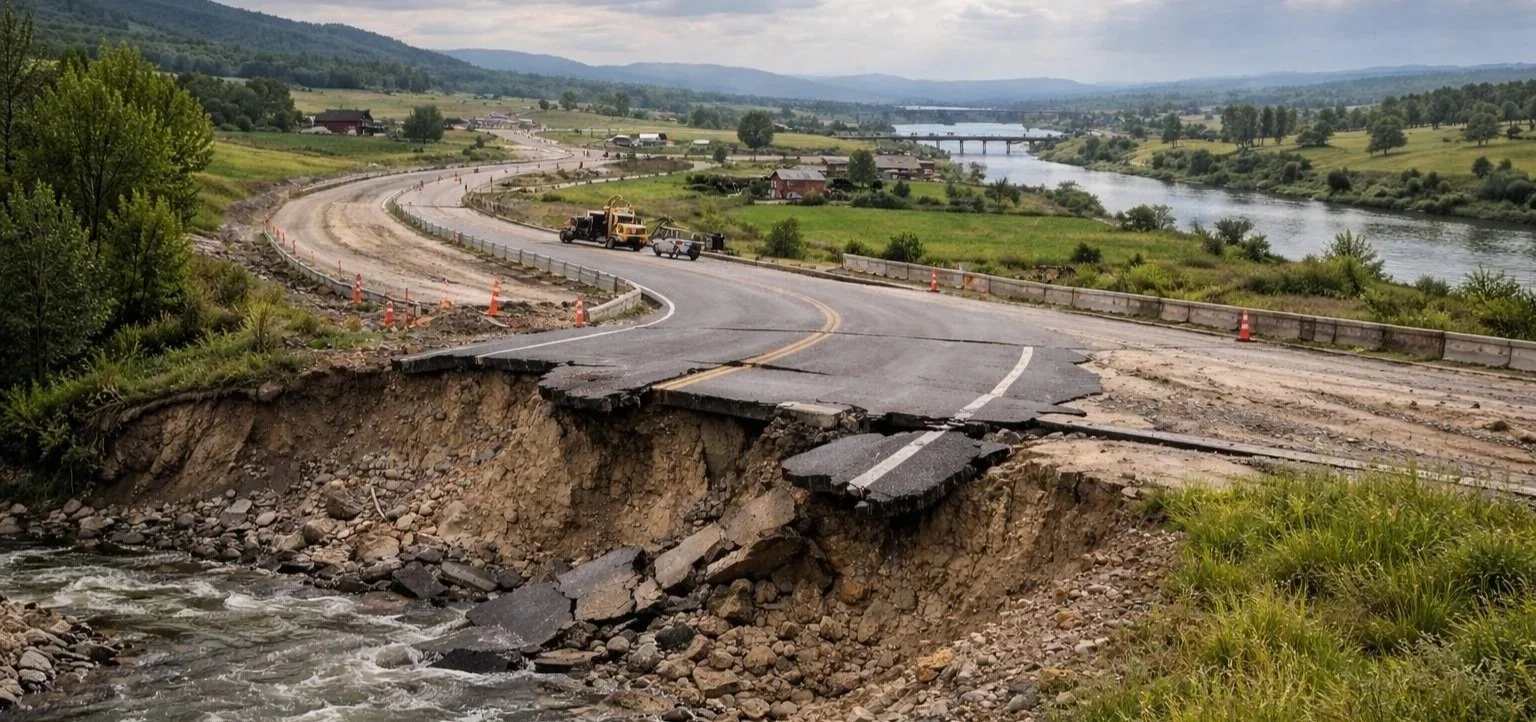
In this current, something breaks. It might be financial, geopolitical, environmental, or social. The exact trigger matters less than the effect: a moment where existing systems prove inadequate. After the shock, there’s a period of reckoning, and then rebuilding. Not everything resets. But some assumptions do.
Day to day, this feels like a sharp disruption, followed by a period of confusion and loss of confidence, and then a renewed search for stability, meaning, and trust. Uncomfortable, but not unprecedented.
After shocks, societies tend to revalue credibility over charisma, institutions over individuals, long-term contribution over short-term gain. There is often a renewed respect for people and organisations that can hold steady rather than dominate.
How do you prepare for this without waiting for disaster? Don’t over-leverage yourself, financially or psychologically. Learn how systems actually work, not how they’re marketed. Build communities where people can think together under pressure. Pay attention to what strengthens trust, not just what improves performance.
Shocks expose what was already fragile. Preparation is about reducing fragility, not predicting the event.
The trap beneath all three.
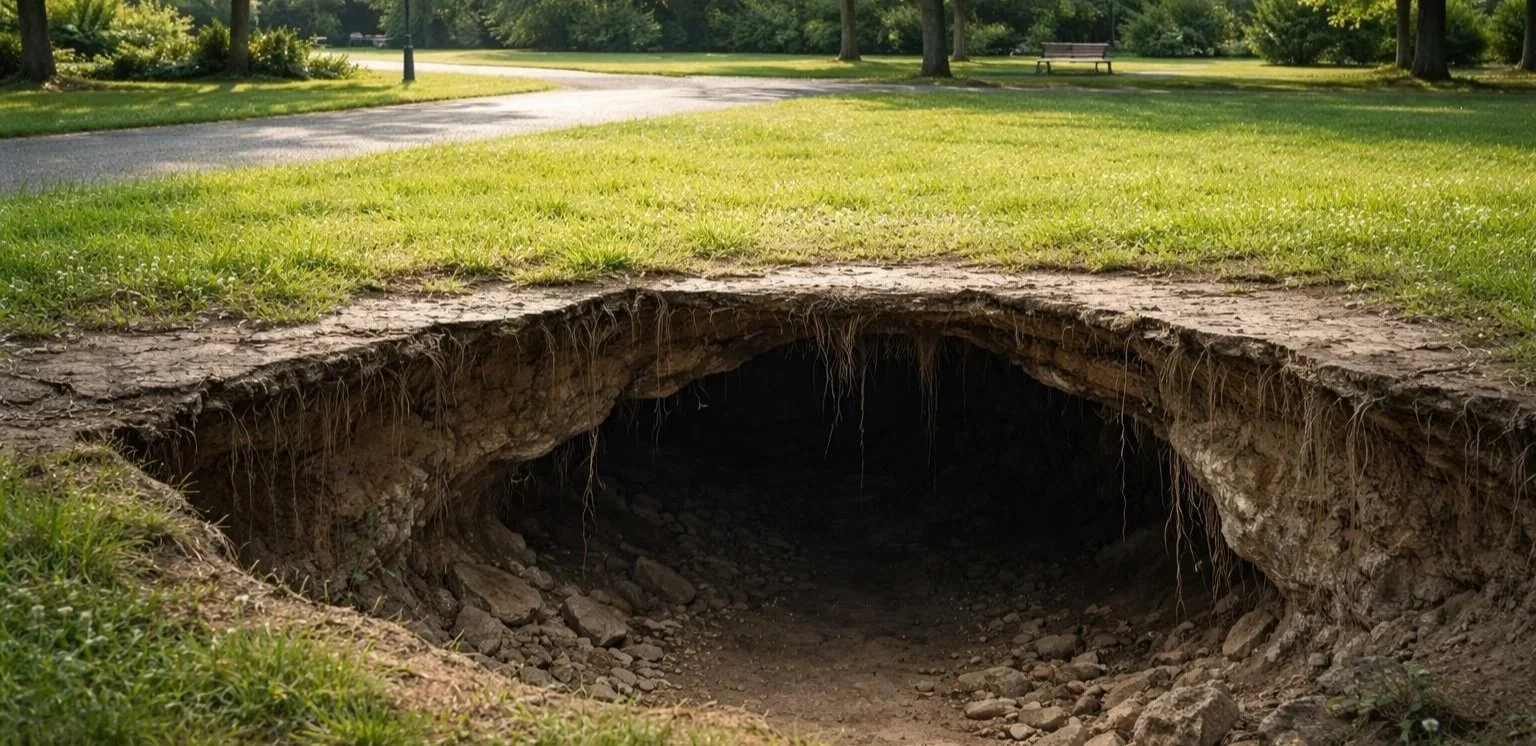
When these currents coexist, and they do, a subtle but serious trap emerges.
Leaders, organisations, and societies often optimise for the first current, the parts of life that still function, while being destabilised by the second, and dangerously unprepared for the third. Strategies are built for continuity, while pressures demand resilience. Decision-making assumes stability, while conditions introduce contradiction. Leadership systems are designed to perform, not to hold strain.
This is how endurance erodes. Not through a single dramatic failure, but through the slow accumulation of unresolved tensions, reactive decisions, and internal fragmentation. I’ve seen this pattern repeat across sectors and geographies: organisations that look successful by conventional measures but are silently hollowing out from within, unable to reconcile the different pressures they face.
The issue is not a lack of adaptation. It is a lack of adaptive capacity.
True adaptiveness does not come from constant change. It comes from systems that can remain internally coherent while adjusting to external pressure. This distinction matters more than most people realise.
What these currents share.
While these currents differ in intensity, they share something important.
In every current, surface performance matters less than underlying coherence. Trust becomes more valuable than scale. Institutions that can endure pressure outperform those built only for growth.
This applies to countries, companies, communities, families, and individuals.
The question facing all of us is no longer: “How do I win in the current system?”
But: “What helps me, and the systems I’m part of, endure and prosper in a less predictable world?”

What ‘Adaptive Capacity’ actually requires.
Adaptive capacity rests on three foundations.
Internal coherence, clarity of purpose, roles, and decision logic, even under pressure. Without this, organisations and individuals fragment when conditions get difficult, making reactive choices that accumulate into strategic drift.
Discernment under strain, the ability to make trade-offs without collapsing into reactivity or paralysis. This is rarer than it sounds. Most systems, when stressed, either freeze or flail. The capacity to stay thoughtful while under pressure is a form of strength that doesn’t show up on any conventional scorecard.
Leadership maturity, the capacity to hold paradox, tension, and uncertainty without defaulting to blame, denial, or over-control. Leaders who need certainty before they can act, or who require someone to be at fault before they can respond, become liabilities when conditions are genuinely ambiguous.
Without these, adaptation becomes noise, a flurry of activity that exhausts without strengthening.
With them, systems can adjust without losing their soul.
These qualities matter at every level: nations, organisations, communities, families, and individuals. They are what allow performance to compound into endurance, rather than being slowly undermined by pressure.
A closing thought.
This moment doesn’t require fear, heroics, or withdrawal.
It asks for realism without cynicism, courage without aggression, leadership without theatrics.
The future isn’t something that happens to us. It’s something we shape daily through the choices we make under pressure.
The more grounded we are, the more room there is, even now, for stability, dignity, and enduring value.
This is what I find myself working toward, both in my own life and in the work I do with others. Not predicting what comes next, but building the capacity to remain coherent within it. And coherence, it turns out, starts not with strategy but with what is happening inside. That is what the next piece explores.